Booking.com
Booking.com is an online travel marketplace for hotels, apartments, vacation rentals, flights, car rentals, taxis, attractions, reviews, loyalty features, and trip support. Founded in Amsterdam in 1996 and now part of Booking Holdings, it grew from a Dutch accommodation startup into a major global travel platform that connects travelers with lodging partners and other travel services.
What Booking.com is
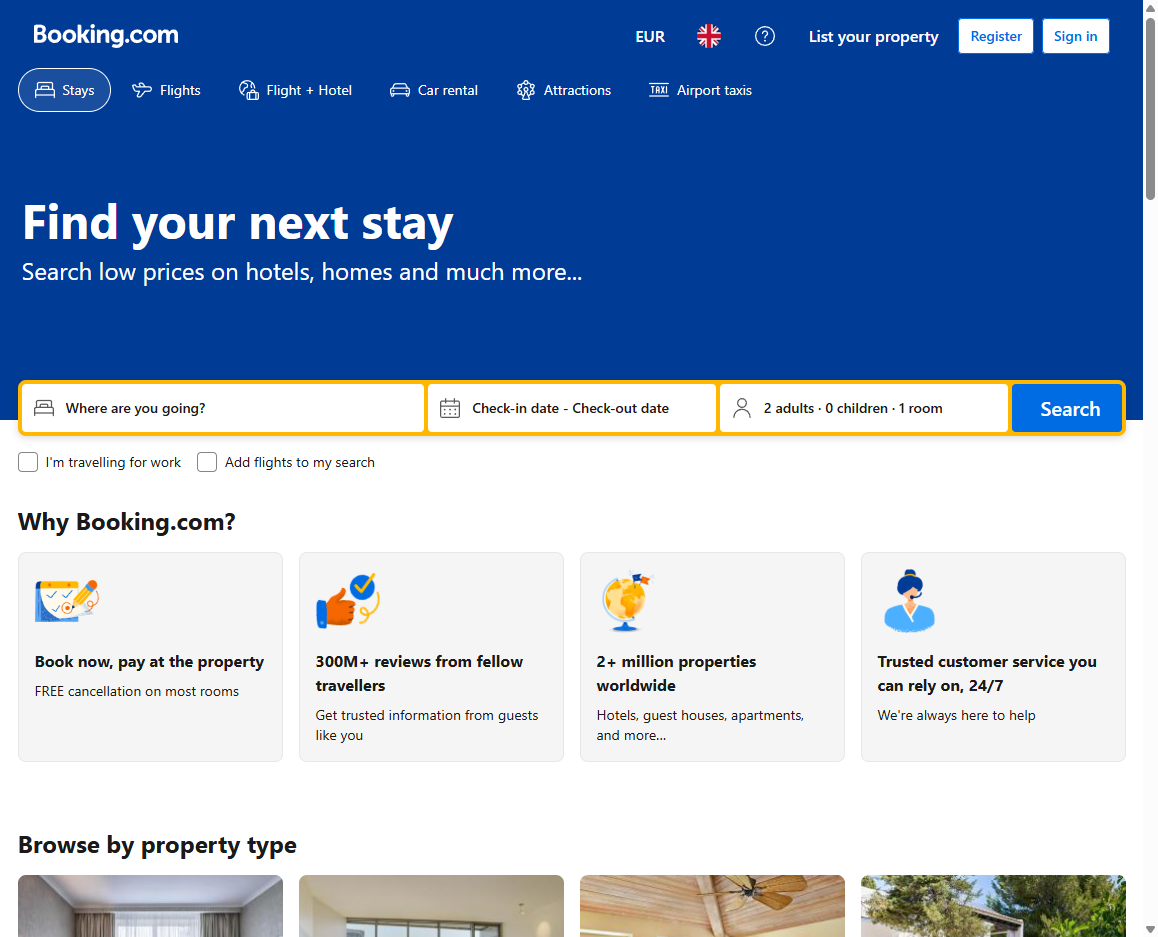
Booking.com is a travel marketplace where people search, compare, reserve, and manage places to stay and other trip services. On Booking.com, the public interface is simple: destination, dates, guests, filters, prices, reviews, maps, and availability. Behind that interface is a large matching system for travelers, hotels, apartment hosts, payment flows, customer support, and local rules. The official Booking.com app is available on the App Store and Google Play.
.svg)

Accommodation marketplace
The company became famous through lodging. Hotels, resorts, hostels, apartments, homes, and other properties list rooms or units, set policies, upload photos, manage calendars, and compete for visibility. Travelers use filters for price, location, amenities, cancellation rules, ratings, accessibility, and property type.
Search, ranking, and reviews
A booking site is not just a directory. Ranking systems decide which options appear first, reviews help visitors reduce uncertainty, and search filters turn a giant catalog into a smaller set of realistic choices. That makes trust central: inaccurate photos, confusing fees, weak moderation, or fake reviews can quickly damage the trip experience.
Partners and commissions
Booking.com sits between travelers and travel suppliers. Many listings are provided by independent hotels, chains, property managers, or private hosts, and the platform typically earns money when bookings happen. This marketplace model gives small properties global reach, but it can also create tension over commission costs, ranking incentives, cancellation policies, and dependence on a large platform.
Beyond hotels
Over time, Booking.com expanded from accommodation toward a fuller trip stack: flights, rental cars, airport taxis, attractions, payment options, loyalty features, and app-based trip management. Booking Holdings calls this broader strategy the Connected Trip, where more parts of travel planning and support can happen through one account and data layer.
Mobile and support
Travel is full of time-sensitive moments: delayed flights, late check-ins, wrong addresses, payment problems, damaged rooms, and last-minute changes. Booking.com therefore depends on mobile notifications, messaging, confirmations, customer support, partner tools, and clear policy information as much as on the initial search page.
Rise and pressure
Booking.com rose because it made European hotel inventory easier to find and book online, then scaled that model globally under Priceline and later Booking Holdings. Its pressure points are now familiar across online travel: regulatory scrutiny, platform fees, scams and phishing, direct-booking competition from hotels, short-term rental disputes, and the expectations created by instant digital service.
Why it matters
Booking.com matters because travel platforms shape how people discover places, compare prices, trust strangers, and move money across borders. A single ranking page can influence which hotel fills rooms, which neighborhood receives visitors, and whether a traveler feels confident enough to book a trip far from home.
WHOIS domain data
Data pulled: May 24, 2026View current WHOIS record
- Domain
- booking.com
- IP address
- 3.170.42.19
- Registrar
- MarkMonitor Inc.
- WHOIS server
- whois.markmonitor.com
- Referral URL
- http://www.markmonitor.com
- Created
- April 17, 1998
- Updated
- March 15, 2025
- Expires
- April 16, 2027
- Nameservers
- ns-1959.awsdns-52.co.uk (205.251.199.167); ns-716.awsdns-25.net (205.251.194.204); ns-1288.awsdns-33.org (205.251.197.8); ns-508.awsdns-63.com (205.251.193.252)
- Domain status
- clientDeleteProhibited; clientTransferProhibited; clientUpdateProhibited; serverDeleteProhibited; serverTransferProhibited; serverUpdateProhibited
- Registrant contact
- Organization Booking.com B.V.; address NL
- Registrant email
- Select Request Email Form at https://domains [dot] markmonitor [dot] com/whois/booking [dot] com
- Tech contact email
- Select Request Email Form at https://domains [dot] markmonitor [dot] com/whois/booking [dot] com